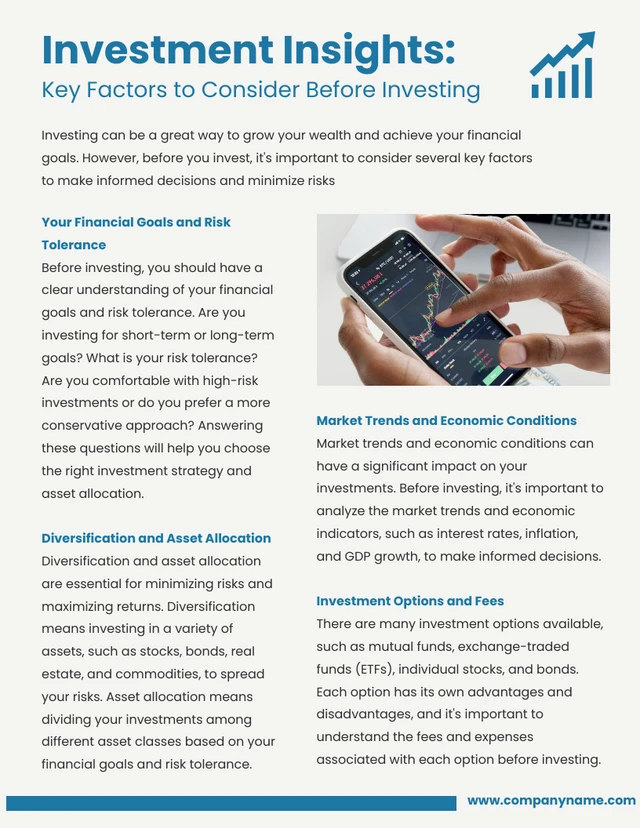
Economic indicators serve as a compass to navigate the complexities of the financial markets, profoundly influencing the performance of Exchange-Traded Funds (ETFs). As these instruments become increasingly popular among investors seeking diversification and cost efficiency, understanding the interplay between key economic indicators and ETF performance becomes crucial. This analysis explores how interest rates, inflation, and GDP growth affect various types of ETFs, providing actionable insights for investors.
Interest Rates and ETF Performance
Interest rates, set by central banks, are a dominant force in the financial landscape. They impact the cost of borrowing, consumer spending, and ultimately, economic growth. The relationship between interest rates and ETF performance is multifaceted and varies across asset classes.
Equity ETFs
For equity ETFs, interest rates can influence market sentiment and corporate profitability. Generally, lower interest rates reduce borrowing costs for companies, potentially enhancing earnings and boosting equity prices. This environment typically benefits equity ETFs. For instance, the NASDAQ-100 Index Tracking Stock (QQQ) often sees positive performance in low-rate environments due to the tech-heavy index, where companies are more growth-oriented and benefit from lower financing costs.
Conversely, rising interest rates can lead to a revaluation of equities as investors demand higher returns, potentially exerting downward pressure on prices. This is particularly evident in high-growth sectors, where future cash flows are discounted more heavily. Bloomberg frequently discusses these dynamics and their implications on equity markets.
Bond ETFs
Interest rates have a direct impact on bond ETFs. When rates rise, existing bonds with lower yields become less attractive, causing their prices to fall. This inverse relationship can negatively affect bond ETFs, as seen in the performance of funds like the iShares 20+ Year Treasury Bond ETF (TLT) during periods of rising rates. Conversely, when rates fall, bond prices rise, benefiting bond ETFs. Investors can track these movements and adjust their strategies accordingly through platforms like Morningstar, which offer detailed bond fund analyses.
Inflation and ETF Performance
Inflation represents the rate at which the general level of prices for goods and services rises, eroding purchasing power. Its impact on ETFs is nuanced and varies across different asset classes.
Commodity ETFs
Commodity ETFs are often viewed as a hedge against inflation. As inflation rises, the prices of commodities like gold, oil, and agricultural products tend to increase, benefiting ETFs that track these assets. For example, SPDR Gold Shares (GLD) typically performs well in inflationary environments as investors flock to gold as a store of value. Analysis from WSJ underscores the correlation between inflationary pressures and commodity prices.
Equity and Bond ETFs
Inflation can pose challenges for both equity and bond ETFs. For equities, high inflation can squeeze profit margins if companies cannot pass on higher costs to consumers. This is particularly challenging for consumer discretionary sectors. On the bond side, inflation erodes the real value of fixed coupon payments, negatively impacting bond prices and, by extension, bond ETFs.
GDP Growth and ETF Performance
Gross Domestic Product (GDP) growth is a broad measure of economic activity and a key indicator of economic health. Its influence on ETF performance is significant.
Equity ETFs
Strong GDP growth signals robust economic activity and corporate earnings potential, which is generally positive for equity ETFs. Funds tracking broad indices like the S&P 500 (SPY) often see gains when GDP growth is strong, reflecting increased investor confidence and higher corporate earnings projections. ETF Trends provides insights into such trends and the factors driving ETF performance in varying economic conditions.
Sector-Specific ETFs
Certain sector-specific ETFs are more sensitive to GDP fluctuations. For instance, industrial ETFs like the Industrial Select Sector SPDR Fund (XLI) may benefit from increased infrastructure spending and economic expansion. On the other hand, defensive sectors such as utilities may underperform during high growth periods as investors rotate towards more cyclical sectors.
Strategic Considerations for Investors
Understanding the impact of economic indicators on ETF performance allows investors to make informed decisions and optimize their portfolios. Here are some strategies to consider:
-
Diversification Across Asset Classes: By holding a mix of equity, bond, and commodity ETFs, investors can mitigate risks associated with specific economic conditions. For instance, while rising interest rates may negatively impact bond ETFs, commodities might benefit from inflationary pressures.
-
Tactical Allocation: Adjusting allocations based on economic forecasts can enhance returns. For example, increasing exposure to commodity ETFs in anticipation of rising inflation or reducing duration in bond portfolios during expected rate hikes can be beneficial.
-
Sector Rotation: Active investors can capitalize on economic cycles by rotating between sectors. During periods of strong GDP growth, cyclical sectors like technology and industrials may outperform, while defensive sectors like utilities may be more resilient during downturns.
-
Monitoring Economic Indicators: Keeping abreast of economic data releases and understanding their implications is crucial. Platforms like Nasdaq and Zacks provide comprehensive data and analysis to facilitate informed decision-making.
In conclusion, economic indicators are pivotal in shaping ETF performance. By comprehensively understanding these dynamics, investors can anticipate market movements and adjust their portfolios strategically, aligning with their investment objectives and risk tolerance. This proactive approach not only enhances potential returns but also provides a robust defense against market volatility.