The imposition of US tariffs on imports from key trading partners has sent ripples across global foreign exchange (forex) markets, significantly affecting major currency pairs and altering trading strategies. The recent policy shifts under President Donald Trump's administration have introduced a complex layer of uncertainty, prompting increased volatility in currency pairs such as USD/JPY and USD/CAD. This article delves into the implications of these tariffs on forex trading strategies, offering expert insights into potential market reactions.
The Tariff Impact on USD-Centric Pairs
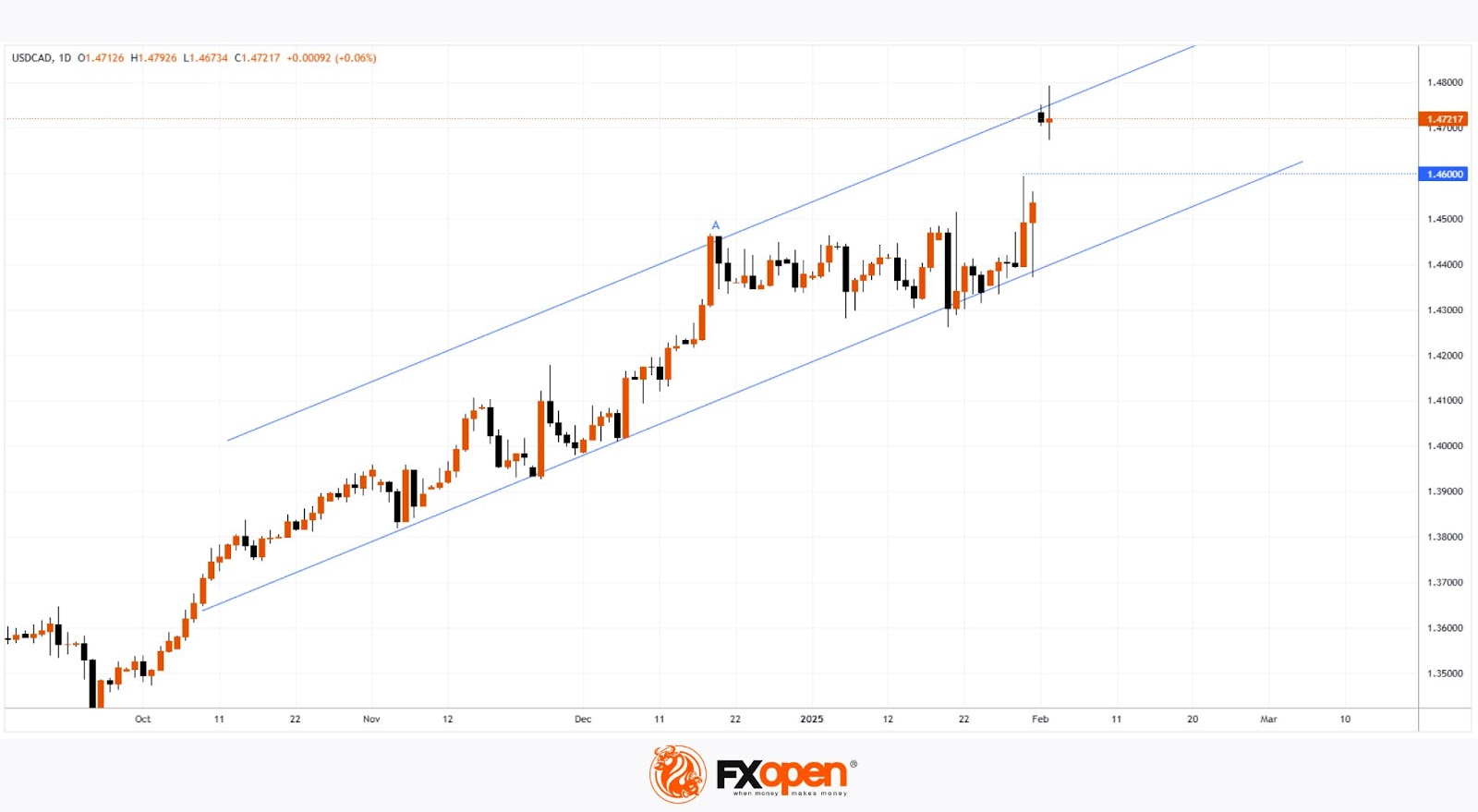
The US Dollar (USD), a central player in the forex markets, has been at the forefront of this economic shift. Notably, the USD/JPY and USD/CAD pairs have shown heightened volatility. The USD/JPY pair, often a barometer for investor sentiment towards the US economy, has experienced fluctuations as traders weigh the potential economic slowdown against Japan's traditionally low-interest rate environment. Similarly, the USD/CAD pair has been sensitive to changes in oil prices, a critical export for Canada, exacerbated by trade tensions.
Chen Zhao, Chief Global Strategist at Alpine Macro, highlights that "the tariffs could lead to a stronger USD in the short term due to flight-to-safety dynamics, but the longer-term effects might see a weakening if international trade slows significantly."
Market Reactions and Strategic Adjustments
Forex traders are adapting their strategies to navigate the uncertainty. According to insights from ICIS, the initial market reaction has been a rush to recalibrate positions, often resulting in sharp, short-lived moves. This environment requires traders to be more agile, employing strategies that can quickly respond to news-driven volatility.
The tariffs have also complicated the Federal Reserve's policy outlook, with potential inflationary pressures clashing with the risk of economic deceleration. The Fed's recent decision to maintain rates between 4.25%–4.50% reflects this delicate balancing act.
Implications for Global Trade and Currency Dynamics
US tariffs have not only impacted domestic currency pairs but have also influenced global trade dynamics. The tariffs on Canadian and Mexican goods, temporarily exempt under the USMCA until April 2, have injected uncertainty into the North American trade landscape. This has been further complicated by tariffs on Chinese imports, increasing the risk of reciprocal economic measures.
The World Integrated Trade Solution (WITS) data indicates that the US accounts for 13.6% of global exports, underscoring its pivotal role in international trade. ING analysts project a 2.5% growth in global goods trade in 2025, driven by intra-continental trade, despite ongoing geopolitical risks and economic nationalism.
Expert Insights and Future Prospects
Experts caution that while tariffs could temporarily bolster the USD, the broader implications might include diminished trade activity and potential retaliatory measures that could weaken the Dollar's long-term outlook. Harvinder Kalirai, Chief Global Fixed Income & Currency Strategist at Alpine Macro, notes, "The interplay between tariffs and forex markets is intricate, with potential for both inflationary pressures and economic slowdown to reshape currency valuations."
As markets continue to adjust to these developments, investors and traders are advised to monitor geopolitical developments closely and remain vigilant in their trading strategies. The situation underscores the importance of a diversified approach, considering both the immediate impacts and longer-term structural changes in global trade and economic policies.
Conclusion
The recent US tariffs have introduced a new paradigm in global forex markets, characterized by increased volatility and strategic complexity. As traders and investors navigate this evolving landscape, staying informed and adaptable will be key to optimizing outcomes. The ongoing dialogue between trade policies and market reactions will continue to shape the forex domain, requiring a nuanced understanding of both economic indicators and geopolitical shifts.
In conclusion, while the short-term effects of tariffs may favor certain currency movements, the broader implications for global trade and economic stability remain a crucial consideration for market participants. The evolving nature of these dynamics calls for a proactive approach to forex trading, leveraging expert insights and data-driven strategies to navigate the complexities of the current economic climate.