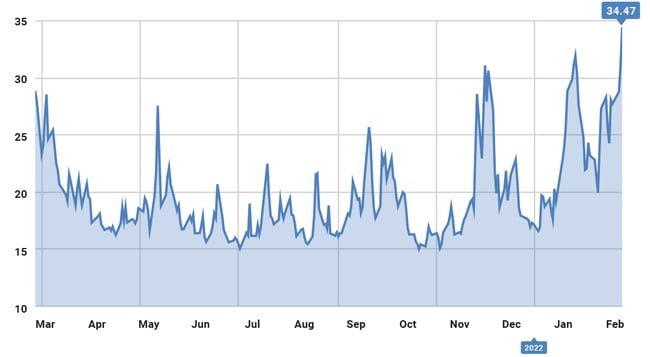
The U.S. stock market has recently witnessed substantial volatility, with the S&P 500 entering correction territory, highlighting a 10.1% decline from its recent peaks. This marks the first significant pullback since October 2023, shaking investor confidence and prompting a strategic reassessment of portfolios. As major indices fluctuate, investors are seeking clarity on the factors contributing to this instability and exploring methods to navigate these turbulent times.

Drivers of Market Volatility
The recent correction in the S&P 500 can be attributed to several intertwined factors. Notably, there has been a substantial rotation away from high-valuation mega-cap technology stocks, which have been under pressure as investors pivot to more value-oriented and cyclical sectors. This shift reflects a broader recalibration in market sentiment, as investors weigh the prospects of economic recovery against the backdrop of potential regulatory changes and tax policy adjustments.
According to Edward Jones, the Nasdaq, heavily weighted with technology stocks, has experienced a more pronounced decline of approximately 14% from its peak, underscoring the vulnerability of growth sectors during periods of heightened economic uncertainty.
The Role of Diversification
In this volatile environment, diversification has emerged as a key strategy for mitigating risk and enhancing portfolio resilience. The performance disparity between sectors is evident, with defensive and cyclical sectors outperforming their growth-oriented counterparts. Healthcare and financials have been identified as sectors with potential upside, particularly if deregulation and favorable tax policies are pursued by the current administration.
Mona Mahajan, a market strategist, emphasizes the importance of a balanced approach: "For long-term investors, market volatility and stock-market pullbacks are not pleasant, but they can offer opportunities to rebalance or add quality investments across a diverse set of stocks, bonds, and international markets."

Bonds: A Safe Haven
Amidst stock market volatility, bonds have provided a stabilizing influence in portfolios. The bond market's outperformance is partly due to its role as a haven for risk-averse investors, offering predictable income streams and lower correlation with equity markets.
The current interest rate environment presents additional opportunities within the bond market. Analysts suggest extending duration in investment-grade bonds could be beneficial, especially if 10-year Treasury yields trend towards 4.5%. Such moves may be prudent, given the potential for Federal Reserve rate cuts later in the year.
International Opportunities
While the U.S. market contends with volatility, international markets, notably in Europe and China, have shown relative strength. European markets, buoyed by fiscal stimulus and rate cuts by the European Central Bank, have outperformed, with indices like the EuroStoxx 50 showcasing substantial gains.
This international outperformance is attributed to investors seeking better valuations and growth prospects outside the U.S. According to FactSet, Europe and China's stock markets have risen 8%-10%, providing a viable alternative for diversification.
Strategic Recommendations
For investors navigating these uncertain times, several strategies can be adopted:
-
Diversification Across Asset Classes: A balanced mix of equities, bonds, and international exposure can cushion against volatility, providing both growth and income potential.
-
Sector Rotation: Focusing on sectors poised to benefit from economic and policy shifts, such as healthcare and financials, can enhance returns.
-
Duration Management in Bonds: Extending bond durations may offer capital appreciation potential if interest rates decline.
-
Global Exposure: Allocating a portion of portfolios to international markets could capitalize on favorable macroeconomic conditions abroad.
-
Quality Over Growth: Emphasizing investments in high-quality companies with robust earnings and strong balance sheets can mitigate risk.

Conclusion
The U.S. stock market's recent correction underscores the inherent volatility of equity markets and the necessity for strategic portfolio management. By adopting a diversified approach and leveraging opportunities in the bond market and international equities, investors can better navigate the challenges and uncertainties that lie ahead. As always, investors are encouraged to consult with financial advisors to tailor strategies that align with their unique objectives and risk tolerance.
As market conditions evolve, staying informed and adaptable will be crucial for achieving long-term investment success.