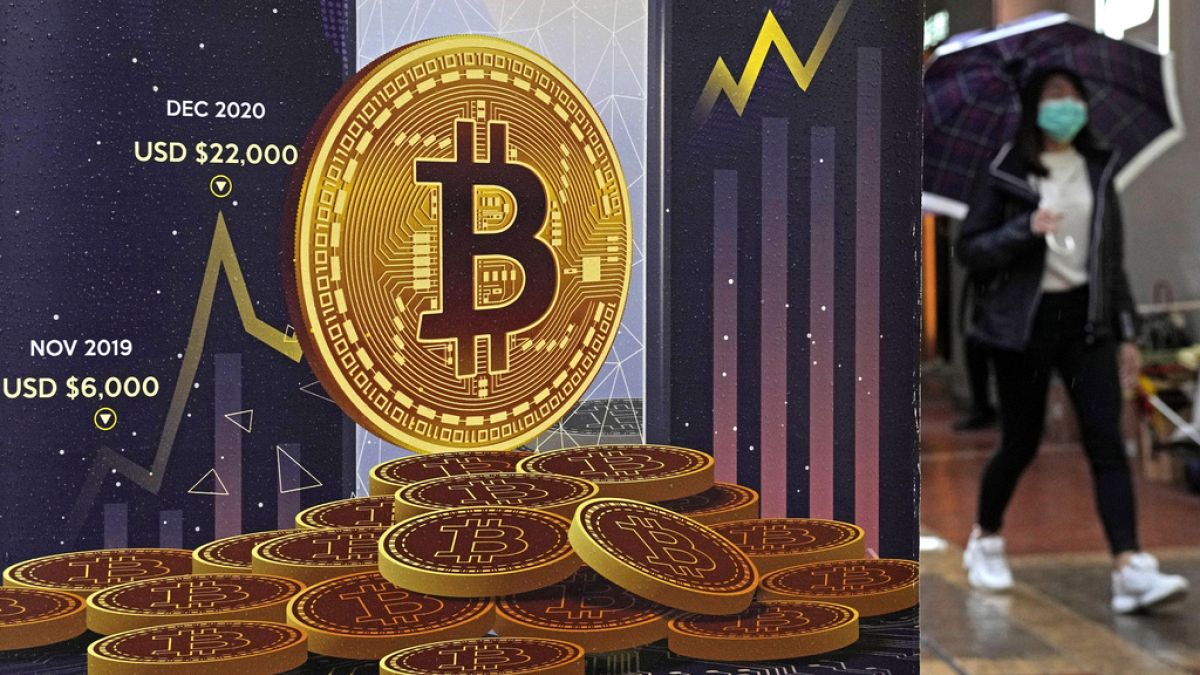
The recent turbulence in the U.S. stock market has reverberated through the cryptocurrency sector, specifically impacting major players such as Bitcoin (BTC) and Ethereum (ETH). This phenomenon has highlighted the increasing interconnectedness between traditional financial markets and digital assets, a relationship that holds significant implications for investors navigating these volatile waters.

The Current Landscape: A Convergence of Traditions and Innovations
As the U.S. stock market experiences a sell-off, cryptocurrencies like Bitcoin and Ethereum have mirrored this trend, prompting a reassessment of the once-presumed independence of digital currencies from traditional financial systems. According to a South China Morning Post report, both Bitcoin and Ether have staggered in response to these market pressures, underscoring a broader trend of cryptocurrencies behaving similarly to risk assets.
Investors have long debated whether cryptocurrencies should be considered a hedge against market downturns or if they should be viewed as yet another volatile asset class prone to the same whims affecting traditional equities. The current market dynamics suggest that cryptocurrencies are increasingly seen as risk assets, subject to the same macroeconomic factors and investor sentiments driving stock market movements.
Understanding the Correlation
The correlation between the U.S. stock market and cryptocurrencies can be attributed to several factors. First and foremost, the influx of institutional investors into the crypto space has aligned the risk profiles of these digital assets more closely with traditional investments. As institutional portfolios typically include both stocks and cryptocurrencies, shifts in stock market sentiment can have a direct impact on crypto valuations.
Moreover, macroeconomic indicators such as interest rates, inflation expectations, and geopolitical uncertainties play pivotal roles in shaping market sentiment across the board. When U.S. equities experience volatility due to changes in Federal Reserve policies or geopolitical tensions, cryptocurrencies are often caught in the same currents because they are part of a larger portfolio strategy aimed at wealth preservation and risk management.
Expert Insights: The Interplay of Sentiment and Strategy
Market analysts have voiced concerns over the increasing correlation between cryptocurrencies and traditional financial markets. A strategist at MarketWatch notes, "The integration of digital assets into mainstream financial portfolios has fundamentally changed the landscape. What we're seeing now is a kind of synchronization where risk aversion in one market precipitates a parallel reaction in another, particularly when liquidity becomes a premium."
Additionally, the impact of high-profile incidents within the crypto industry, such as security breaches and regulatory shifts, cannot be discounted. For instance, the recent cybersecurity breach at Bybit, touted as the largest crypto theft in history, has exacerbated market sell-offs by instilling fear and uncertainty among investors. Such events highlight the fragility of investor confidence in the crypto market and its susceptibility to external shocks.
Long-term Implications: Navigating a Converged Financial Ecosystem
The convergence of traditional and digital financial markets presents both challenges and opportunities for investors. On one hand, the growing correlation complicates the use of cryptocurrencies as a diversification tool meant to offset traditional market risks. On the other hand, it underscores the maturation of the crypto market, which is increasingly being integrated into global financial systems.
Looking ahead, experts predict that the relationship between these two asset classes will continue to evolve. The anticipated regulatory frameworks being developed in major economies like the United States and China could further solidify this interdependence by providing a clearer structure within which cryptocurrencies operate.
Moreover, the development of blockchain-based financial products and services, such as tokenized assets and decentralized finance (DeFi), promises to deepen the integration between these markets. As these innovations gain traction, they might offer novel avenues for hedging and risk diversification that were previously unavailable.
Conclusion: A New Era of Financial Dynamics
As we move further into 2025, it is evident that the financial ecosystem is becoming increasingly complex, with traditional and digital markets growing more intertwined. Investors are advised to approach these changes with a comprehensive understanding of both asset classes, leveraging insights from market trends and expert analyses to navigate the nuanced landscape.
In this new era where stocks and cryptocurrencies move in tandem, strategic asset allocation, ongoing risk assessment, and an openness to emerging financial instruments will be crucial in optimizing portfolios for both risk mitigation and growth potential. The future of investment, it appears, will be defined by a blend of tradition and innovation, requiring astute attention to the dynamic interplay between conventional and digital financial markets.