In the intricate landscape of commodity futures markets, spot prices serve as a linchpin for determining the pricing of futures contracts. These immediate market prices reflect the real-time value of commodities and are pivotal for traders and investors seeking to mitigate risks associated with price volatility. Spot prices are not merely reflections of current market conditions; they are integral to the strategies employed by market participants to hedge against adverse fluctuations.
Understanding Spot Prices
Spot prices represent the current market value at which a commodity can be bought or sold for immediate delivery. They encapsulate the instantaneous demand-supply dynamics and are often uniform across global markets after accounting for exchange rates, according to Investopedia. These prices are the benchmarks for futures contracts, providing a foundational reference point for market participants.
Impact on Futures Markets
Futures contracts are derivatives that obligate the purchase or sale of a commodity at a predetermined price on a specified future date. Pricing these contracts involves several components, with spot prices being central. The price of a futures contract typically incorporates the spot price adjusted for anticipated changes in supply and demand, the risk-free rate of return, and carrying costs such as storage and transportation. This comprehensive approach ensures that futures prices accurately reflect expected market conditions.
For instance, in agricultural markets, producers utilize futures contracts to lock in prices for their crops, thereby safeguarding against potential declines in spot prices. This hedging strategy is crucial in environments where commodity prices are subject to significant volatility.
Hedging Strategies
Hedging via futures contracts is a strategic maneuver employed by investors to offset potential losses from unfavorable movements in spot prices. By entering a futures contract, an agricultural producer, for example, can secure a selling price for their produce, reducing the risk posed by price drops at the time of harvest. This strategy is particularly vital in sectors like agriculture, where price swings can be pronounced due to factors such as weather changes and geopolitical events.
Market Dynamics: Contango and Backwardation
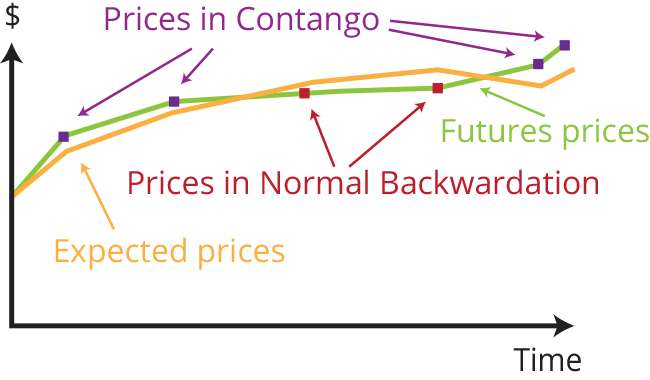
The disparity between spot prices and futures prices can lead to distinct market conditions known as contango and backwardation, each with unique implications for investors. In a contango scenario, futures prices are higher than current spot prices, often attributed to higher carrying costs over time. Conversely, backwardation occurs when futures prices are lower than spot prices, typically signaling an anticipated decline in commodity availability or an increase in demand.
These conditions are critical for investors as they influence trading strategies and the timing of contract execution. Understanding the nuances of contango and backwardation allows investors to make informed decisions, potentially capitalizing on market inefficiencies.

The Role of Institutional Players
Institutional investors and financial institutions play a significant role in the commodity futures markets, leveraging sophisticated trading platforms and risk management tools. The CME Group, a leading derivatives marketplace, offers a plethora of futures and options products that are pivotal for managing risk and enhancing market liquidity. These platforms facilitate efficient price discovery and provide a robust infrastructure for trading activities.
Conclusion
Spot prices are indispensable to the functioning of commodity futures markets, providing a real-time snapshot of market valuations that underpin futures pricing. Their significance extends beyond mere numbers, influencing the strategies of hedgers and speculators alike. As markets continue to evolve, understanding the intricacies of spot prices and their impact on futures markets remains a crucial competency for investors aiming to navigate the complexities of global commodity trading. With tools such as futures contracts, market participants can effectively hedge against volatility, ensuring stability amidst the ever-fluctuating landscape of global markets.