Navigating Forex Volatility: Strategies Amid U.S. Tariff Policies
The forex market is currently experiencing heightened volatility due to the recent announcement of a proposed 25% tariff on non-U.S. manufactured vehicles. This development has particularly impacted the Canadian Dollar (CAD) and Mexican Peso (MXN), leading to significant shifts in trading strategies. With these changes creating ripples across major currency pairs, traders must adapt to maintain a competitive edge.
Current Market Dynamics
As of April 1, 2025, the CAD has seen a notable decline of approximately 2% against the U.S. Dollar (USD) following the tariff announcement. This reaction underscores the sensitivity of currencies to U.S. trade policies, particularly those closely tied to commodity exports, like Canada’s oil and agricultural products. The Mexican Peso has also felt the pressure, reinforcing the link between trade policies and forex movements.
According to the ForexLive Americas FX news wrap, the announcement has led to a wave of caution among traders as they awaited further developments. “Market participants are adjusting their positions in response to the uncertainty created by the tariffs,” noted a Forex analyst. This sentiment reflects a broader trend where external economic policies significantly influence currency valuations.
Strategic Insights for Traders
In this volatile environment, traders can employ several strategies to mitigate risks and capitalize on opportunities. Here are key considerations:
-
Diversification: Traders should consider diversifying their portfolios to reduce exposure to any single currency that may be impacted by U.S. tariffs. For instance, pairing currencies that are less correlated with U.S. economic policy could provide a buffer against volatility. Exploring the Euro (EUR) or Japanese Yen (JPY) may present opportunities since these currencies are less directly affected by U.S. tariffs.
-
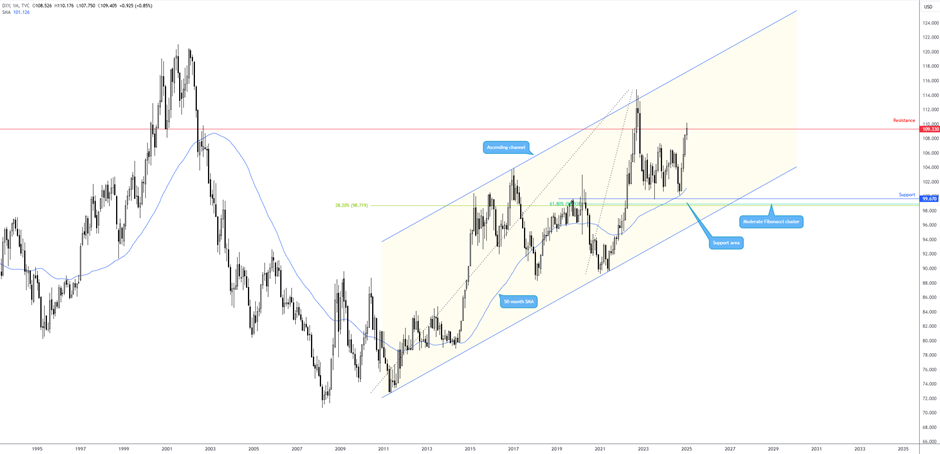
Technical Analysis: Utilizing technical analysis can help traders identify key support and resistance levels. For example, monitoring the CAD/USD pair for potential rebounds near technical support levels can provide actionable insights. A trader might look for patterns that indicate a potential reversal or continuation of the current trend, using tools such as moving averages or Fibonacci retracement levels.
-
Stay Informed: Keeping abreast of news related to tariff developments and economic indicators is crucial. Markets are likely to react swiftly to any changes in policy or economic forecasts. Following reliable sources like ForexLive will ensure traders are up-to-date with the latest information that could impact their trading strategies.
Conclusion
The forex landscape is shifting rapidly due to external economic pressures, particularly U.S. tariff policies. By employing strategic diversification, conducting thorough technical analysis, and staying informed, traders can better navigate the complexities introduced by these developments. As the situation evolves, adaptability will be key to maintaining a competitive edge in the forex market.

In conclusion, the current volatility in the forex market, driven by U.S. tariffs, presents both challenges and opportunities for traders. As evidenced by the CAD and MXN's recent performance, the ability to pivot strategically can lead to successful navigation through uncertain waters. Traders must remain vigilant and proactive in their strategies to weather the storm of economic policy changes.
For continuous updates and expert insights, consider following resources such as ForexLive and FX Street.