Navigating Forex Market Volatility: Strategies for April 2025
In April 2025, the forex market is in a state of flux, subject to the whims of geopolitical tensions and economic uncertainties. With the impact of U.S. tariff policies rippling through currency markets, traders must adapt their strategies to capitalize on these fluctuations. Recent trends indicate that the U.S. dollar is facing significant pressure, particularly against the euro and the Japanese yen. As traders seek effective strategies to navigate this complex landscape, understanding the current dynamics of major currency pairs is critical.

Current Market Dynamics
U.S. Dollar Weakness
Recent developments have revealed that the U.S. dollar is encountering notable weakness, especially against key currencies such as the euro and Japanese yen. A recent hawkish statement from Federal Reserve Chair Jerome Powell failed to bolster the dollar, primarily because traders remain focused on the performance of risk assets. The market is keenly aware that inflation concerns and ongoing tariff discussions are weighing heavily on investor sentiment.
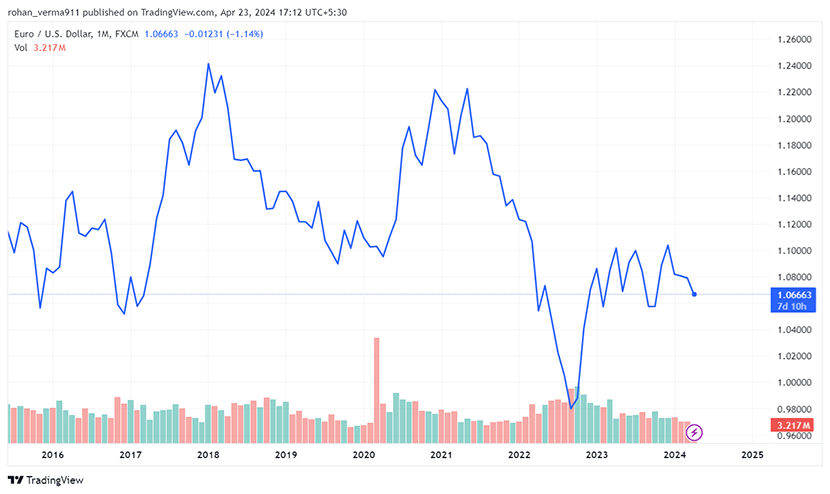
The euro appears poised to benefit from the dollar's idiosyncratic losses, especially in light of expectations surrounding a potential 25 basis point rate cut by the European Central Bank (ECB). Analysts suggest that these dynamics could propel the EUR/USD pair upward to approximately 1.15. This anticipated shift illustrates the delicate balance of power among major currencies, as traders must remain vigilant to take advantage of such fluctuations.
Emerging Market Currencies
Emerging market currencies, particularly the South African Rand (ZAR) and the Brazilian Real (BRL), are currently under pressure due to the uncertainty surrounding U.S. tariff policies. This uncertainty introduces significant volatility, requiring traders to develop adaptive strategies. For instance, the BRL has experienced sharp fluctuations, reflecting investor anxiety regarding trade relations and economic stability.

As geopolitical tensions persist, emerging markets could be particularly vulnerable to sudden shifts in trade policy, making it essential for investors to monitor these developments closely. According to market experts, a sudden announcement regarding tariffs or trade agreements could lead to substantial movements in these currencies, underscoring the need for responsive trading strategies.
Strategic Recommendations
To effectively navigate the current forex market volatility, traders should consider the following strategic recommendations:
-
Focus on Major Currency Pairs: Prioritize trading pairs such as EUR/USD and USD/JPY, which are more liquid and typically respond more robustly to global economic news. This strategy enhances the potential for profit as these pairs often demonstrate clearer trends.
-
Monitor Economic Indicators: Keeping an eye on economic indicators, including inflation data, employment reports, and central bank announcements, is vital. These indicators can provide insights into potential currency movements and help traders anticipate shifts in market sentiment.
-
Utilize Technical Analysis: Employing technical analysis tools can aid in identifying key entry and exit points. In volatile market conditions, understanding chart patterns, resistance levels, and support zones can be instrumental in executing successful trades.
-
Risk Management: Implementing robust risk management strategies is crucial for mitigating losses during unpredictable market swings. This includes setting stop-loss orders and determining appropriate position sizes based on market conditions and personal risk tolerance.

Conclusion
The forex market in April 2025 presents both challenges and opportunities for traders. While geopolitical developments and economic indicators create a landscape of uncertainty, informed and adaptive strategies can lead to successful navigation through this volatility. As traders strive to capitalize on currency movements, continuous education and a proactive approach to market analysis will be key to achieving success in these turbulent times.
By staying attuned to market dynamics, traders can better position themselves to respond swiftly to changes, ensuring that they not only survive but thrive amid the fluctuations of the forex landscape.
Keywords
Forex, U.S. Dollar, EUR/USD, Emerging Markets, Trading Strategies, Volatility
References