Institutional Investment in Bitcoin: A Strategic Shift Amid Geopolitical Tensions
In recent weeks, Bitcoin (CRYPTO: BTC) has demonstrated remarkable resilience, trading at approximately $106,645 despite significant geopolitical tensions, particularly between Israel and Iran. This stability comes as institutional investors increasingly recognize Bitcoin's potential as a hedge against market volatility and inflation. As Bitcoin's market capitalization reaches $2.1 trillion, the implications of this influx of institutional investment are profound, shaping the asset's price dynamics and market stability.

Market Capitalization and Institutional Interest
Bitcoin's surge to a $2.1 trillion market capitalization solidifies its position as the world's largest cryptocurrency. Institutional interest has surged, with major financial players entering the market, reflecting a broader acceptance of digital assets as viable investment options. This trend is emphasized by JPMorgan's recent trademark filing for a digital asset platform, indicating a deeper commitment from traditional financial institutions to engage with cryptocurrencies.
According to CoinDesk, "Institutions are recalibrating their strategies as they recognize Bitcoin's favorable asymmetry amid rising global risks" (CoinDesk). The entry of institutional players is expected to enhance Bitcoin's liquidity and stability, making it an attractive option for portfolio diversification.
Geopolitical Impacts on Market Dynamics
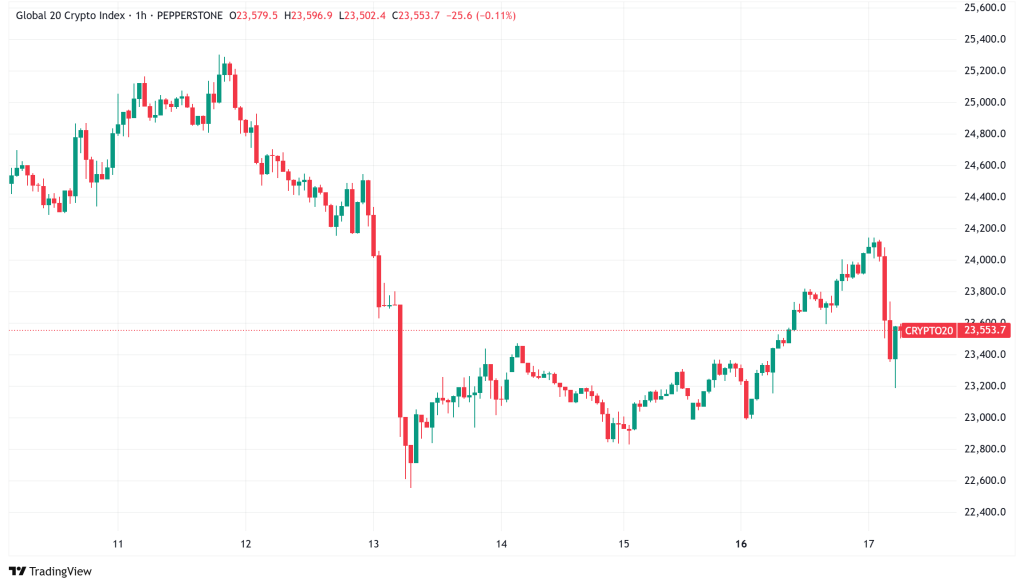
The ongoing geopolitical tensions between Israel and Iran have created a complex backdrop for Bitcoin's price movements. Analysts note that while Bitcoin has faced downward pressure due to these tensions, its ability to maintain a strong support level around the 50-day simple moving average (SMA) suggests a consolidation phase rather than a panic sell-off.
The Market Factor, a proxy for the broader universe of liquid crypto assets, fell by 4.06%, indicating that while major cryptocurrencies like Bitcoin held steady, altcoins experienced more significant sell-offs (CoinDesk). This divergence underscores Bitcoin's perceived stability compared to more volatile altcoins, suggesting that investors are increasingly viewing Bitcoin as a safe haven asset in turbulent times.
Strategic Implications for Investors
For investors, the current landscape presents both opportunities and challenges. The influx of institutional capital is likely to enhance Bitcoin's liquidity and stability, making it an attractive option for those seeking to diversify their portfolios amidst global uncertainties. According to a recent report by CoinShares, institutional inflows into Bitcoin-related investment products reached $400 million last week alone, demonstrating significant confidence in its long-term value proposition.
However, the volatility associated with geopolitical events necessitates a cautious approach. Investors are advised to monitor market developments closely, particularly those related to international relations and regulatory changes. As capital flows into Bitcoin increase, the potential for price fluctuations also rises, creating both opportunities for gains and risks for losses.
The Institutional Perspective
Many institutional investors are now considering Bitcoin as a strategic asset that can provide a hedge against inflation and currency devaluation. Historically, Bitcoin has been compared to gold, often referred to as "digital gold." According to a survey conducted by Fidelity, 70% of institutional investors believe that cryptocurrencies could serve as a hedge against inflation, reinforcing the notion that Bitcoin is gaining traction as a credible investment vehicle.
Moreover, the involvement of large financial institutions adds a layer of credibility and stability to the cryptocurrency market. With firms like BlackRock and Goldman Sachs exploring Bitcoin-related investment products, the institutional backing is expected to attract more mainstream investors. This shift may also pave the way for further regulatory acceptance, which could enhance the legitimacy of cryptocurrencies within the traditional financial ecosystem.
Conclusion
As Bitcoin continues to navigate the complexities of the global financial landscape, its role as a strategic asset for institutional investors is becoming increasingly clear. The interplay between geopolitical tensions and market dynamics will be crucial in shaping Bitcoin's trajectory in the coming months.
Investors are encouraged to stay informed and consider the implications of these developments on their investment strategies. The continued interest from institutional players, combined with Bitcoin's historical resilience, positions the cryptocurrency as a potentially valuable addition to diversified investment portfolios.
Keywords
Bitcoin, Institutional Investment, Geopolitical Tensions, Market Capitalization, Digital Assets, Cryptocurrency
For further information and resources, consider visiting CoinDesk for ongoing coverage of the cryptocurrency market.