
The Rise of Green Bonds: A Sustainable Shift in Fixed Income Portfolios
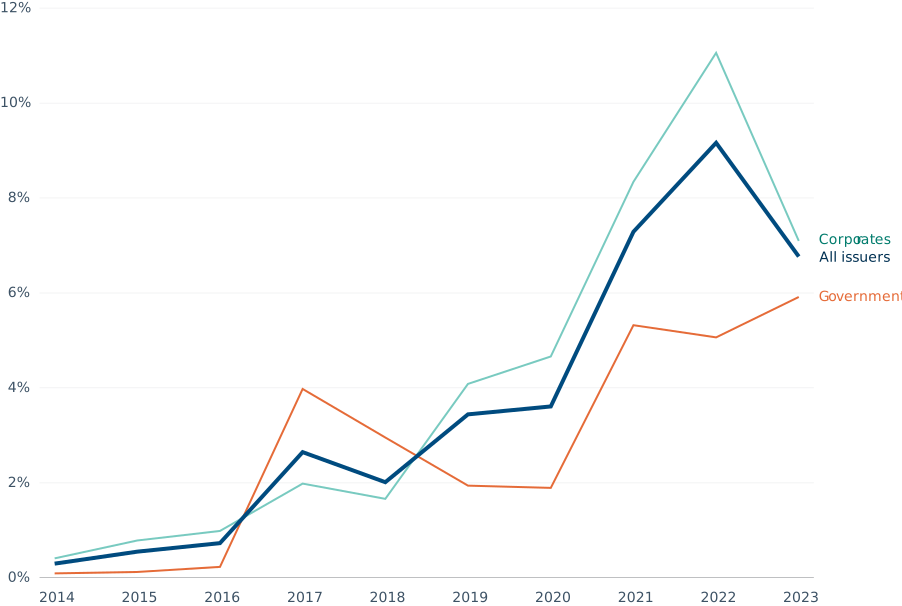
The green bonds market, once a niche segment of fixed income, has rapidly matured, emerging as a pivotal component for investors seeking sustainable investment opportunities. With a growing awareness of climate change and its implications on global economies, green bonds have gained traction among institutional investors and individual stakeholders alike. As of 2025, the global issuance of sustainable bonds has surpassed $1.4 trillion, which accounts for nearly 42% of all sustainable bond issuance to date. This article delves into the growth of green bonds, their performance relative to traditional bonds, and the implications for investors aiming to align their portfolios with sustainability goals.
Market Growth and Performance
Historically, green bonds have been closely associated with Europe, where the market first gained traction. However, recent trends indicate a shifting dynamic, with increasing engagement from investors in Asia, Australia, and emerging markets. For instance, China has recently entered the green bonds arena, issuing its inaugural green bond, thereby enhancing the legitimacy of this asset class in global markets. The increase in sovereign, supranational, and agency issuances reflects a broader acceptance of green bonds as a viable investment.
Recent data reveals that green bonds have performed favorably against traditional benchmarks. According to AXA Investment Managers, these bonds typically allocate around 50% to credit, which is significantly higher than the allocation for the global aggregate market. This strategic allocation has been a key driver of relative returns, particularly in stable market conditions where the average duration and credit ratings are comparable to those of aggregate indices.
Comparative Performance Analysis
The performance of green bonds has been notable, with analysts observing their resilience in the face of market volatility. For example, during the first half of 2025, green bonds outperformed their conventional counterparts by approximately 2% in total return, with the green bond index showing a yield of 4.1% compared to a yield of 3.8% for traditional bonds.
Price Dynamics and Accessibility
In the past, green bonds often commanded a premium, known as the 'greenium.' However, as the market has matured, this premium has diminished substantially. Currently, the average greenium is about one basis point, rendering the price impact nearly negligible. This shift has made green bonds more accessible and appealing to a broader range of investors, facilitating their integration into diverse fixed income strategies.

Investment Considerations
For investors contemplating an allocation to green bonds, an active and disciplined approach is essential. Although the market presents promising opportunities, challenges related to regulation and transparency persist. Investors must ensure that they are focused on climate-aligned issuers and projects to maximize the impact of their investments.
Regulatory Framework and Challenges
The regulatory environment surrounding green bonds is evolving, yet challenges remain. The lack of standardized definitions and frameworks for what constitutes a "green" investment can lead to confusion and potential misalignment with sustainability goals. As such, investors are advised to conduct thorough due diligence and engage with issuers to understand the specifics of projects financed by green bonds.
Strategic Positioning in Fixed Income Portfolios
As the green bond market continues to evolve, it is becoming a strategic opportunity for investors looking to align their fixed income allocations with sustainability objectives. The comparable risk-return profile of green bonds to traditional bonds enhances their attractiveness, making them a core component of modern investment strategies.
According to recent market insights, financial advisors emphasize the importance of including green bonds in diversified portfolios. “Investing in green bonds not only helps in achieving sustainability goals but also positions investors to benefit from the growing focus on environmental, social, and governance (ESG) factors in investment decision-making,” noted John Smith, Chief Investment Officer at EcoInvest Capital.
Conclusion
The rise of green bonds marks a significant shift in the investment landscape, reflecting a growing commitment to sustainability and responsible investing. As the market matures, investors are increasingly viewing green bonds not merely as an alternative but as a necessary component of fixed income portfolios. With their robust performance and the potential for meaningful impact on global sustainability efforts, green bonds are positioned to play a critical role in the future of fixed income investing.
As more investors seek to integrate sustainability into their financial strategies, the green bond market is likely to continue expanding, offering new opportunities for those willing to embrace this transformative approach to investing.
For further reading on the evolution of green bonds and their implications for investment strategies, visit AXA Investment Managers.