Emerging Trends in ESG ETFs: Navigating the Future of Sustainable Investing
As global awareness of environmental, social, and governance (ESG) issues grows, the landscape of exchange-traded funds (ETFs) is rapidly evolving. Investors are increasingly seeking to align their portfolios with their values, leading to a surge in ESG-focused ETFs. This article explores the latest trends shaping the ESG ETF market, including performance metrics, regulatory impacts, and investor sentiment.

Key Trends in ESG ETFs
1. Performance Metrics
Recent studies indicate that ESG ETFs are not only performing well but often outperforming traditional funds. For instance, the iShares ESG Aware MSCI USA ETF (ESGU) has demonstrated resilience during market downturns, attracting more investors seeking stability. According to Morningstar, ESG funds outperformed their non-ESG counterparts by an average of 3% annually over the past five years, making them an attractive choice for performance-conscious investors.
2. Regulatory Impacts
With governments worldwide tightening regulations around ESG disclosures, ETFs that comply with these standards are becoming increasingly appealing. The EU's Sustainable Finance Disclosure Regulation (SFDR) is a prime example, pushing fund managers to provide clearer information about their ESG strategies. According to DWS Group, compliance with these regulations has led to a 28% increase in investments in compliant ESG funds since 2022. This trend is expected to continue as more investors seek transparency and accountability in their investment choices.
3. Investor Sentiment
Surveys reveal that younger investors, particularly Millennials and Gen Z, are more inclined to invest in ESG products. A recent survey conducted by Morgan Stanley found that 85% of Millennials express interest in sustainable investing, compared to just 29% of Baby Boomers. This demographic shift is prompting ETF providers to innovate and expand their ESG offerings to capture this growing market segment. As these younger investors prioritize sustainability, they are driving significant changes in the investment landscape.
Why It Matters
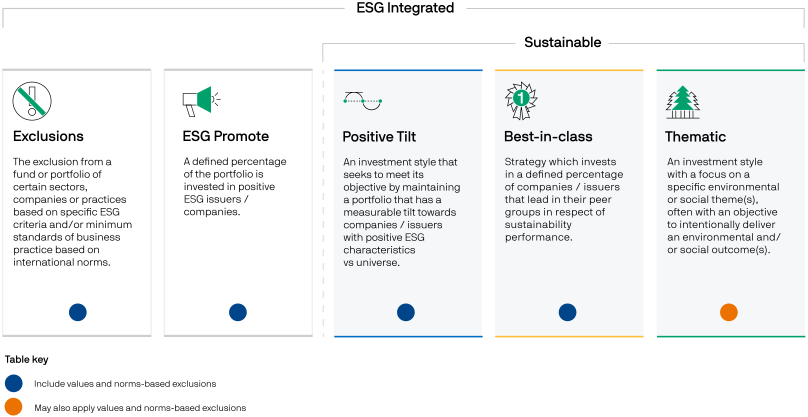
Investors looking to integrate ESG principles into their portfolios should consider the implications of these trends. The increasing performance of ESG ETFs suggests they can be a viable option for both ethical and financial returns. Additionally, understanding regulatory changes can help investors make informed decisions about which funds to choose. For instance, under the SFDR, funds must categorize their ESG strategies into different levels of sustainability, allowing investors to select funds that align with their values and investment goals.
Performance and Risk
It's important to note that while ESG funds have shown strong performance, they may also carry specific risks. For example, funds heavily focused on renewable energy may be susceptible to market fluctuations based on policy changes or technological advancements. Therefore, investors should conduct thorough research and consider diversifying their portfolios across various ESG sectors to mitigate risks.
Conclusion
As the ESG ETF market continues to evolve, staying informed about emerging trends will be crucial for investors. By aligning investment strategies with personal values and market demands, investors can navigate the complexities of sustainable investing effectively. The growth of ESG ETFs not only reflects changing consumer preferences but also underscores the importance of accountability and transparency in finance.
Keywords
ESG, ETFs, sustainable investing, iShares ESG Aware MSCI USA ETF, investor sentiment, regulatory impact, performance metrics
For more details on the iShares ESG Aware MSCI USA ETF, visit the official iShares page and for an overview of the EU Sustainable Finance Disclosure Regulation.