
Robinhood's Stock Surge: Analyzing the 2026 Market Dynamics
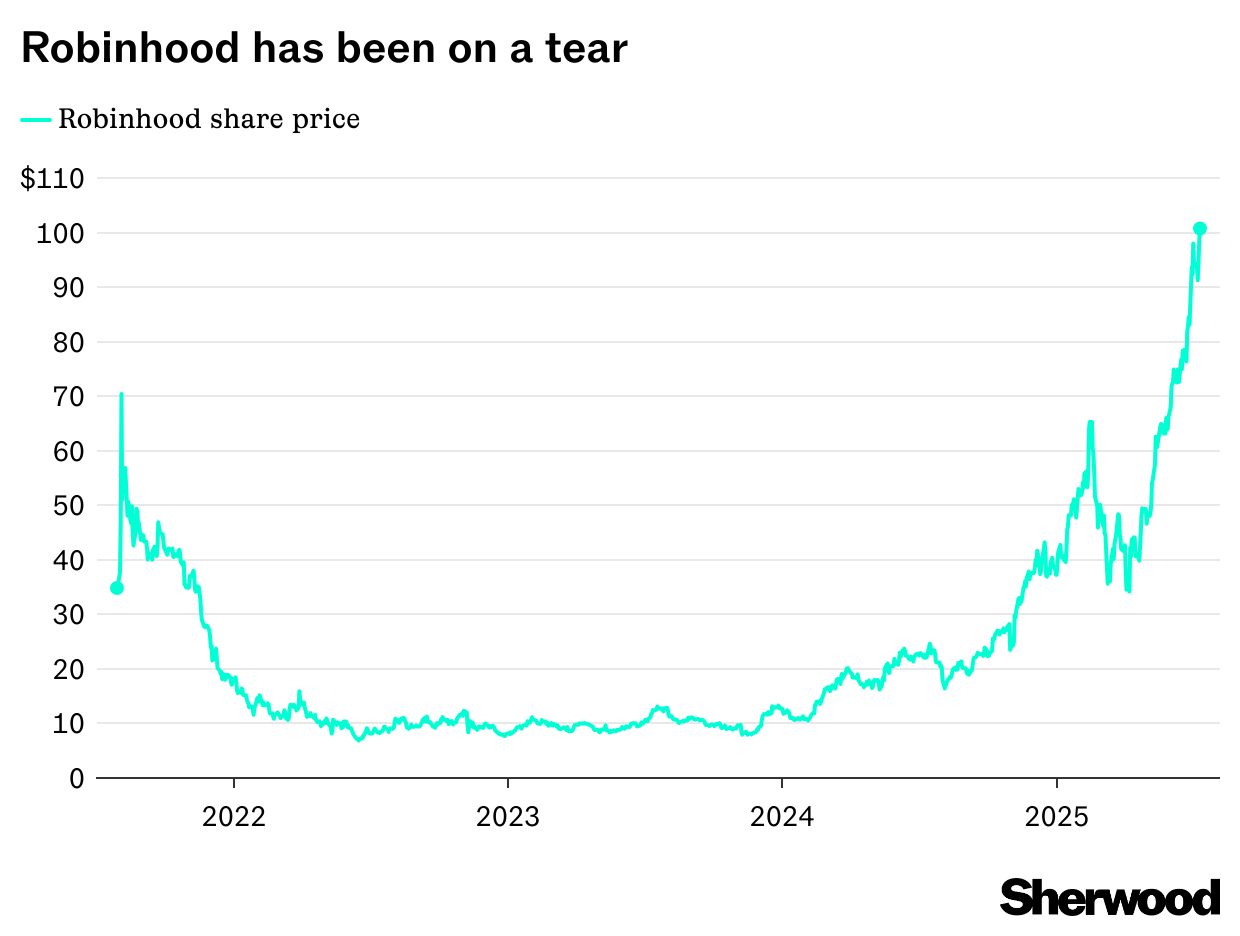
As the stock market navigates through a tumultuous landscape defined by geopolitical tensions and an evolved retail trading environment, Robinhood Markets (ticker: $HOOD) has emerged as a key player. On January 9, 2026, the company's stock closed at $116.15, reflecting a significant rise that has drawn the attention of investors keen on capitalizing on the growing enthusiasm surrounding fintech. This article explores the factors contributing to Robinhood's performance and the broader implications for the market.

Overview of Robinhood's Recent Performance
Robinhood's recent stock surge is not merely a product of isolated market forces; it signifies a broader trend within the retail trading sphere. The current stock price of $116.15 places Robinhood's market capitalization at $103.72 billion, with a price-to-earnings (P/E) ratio of 48.56. However, trading volume has been notably low, with only 33.87K shares traded, significantly below its average of 18.02 million shares.
Key Metrics
- Current Stock Price: $116.15
- Market Capitalization: $103.72 billion
- P/E Ratio: 48.56
- Trading Volume: 33.87K shares
Factors Influencing Stock Movement
1. Geopolitical Tensions
The geopolitical landscape has had a profound impact on investor sentiment towards Robinhood. Recently, events in Venezuela have created an atmosphere of uncertainty, which historically leads to heightened market volatility. Investors often react to such uncertainties by seeking platforms that facilitate quick trading options, positioning Robinhood as a favorable choice during turbulent times.
2. Retail Trading Growth
Robinhood continues to attract a growing base of retail investors, bolstered by its user-friendly interface and innovative features. The platform has successfully positioned itself as a gateway for individuals looking to participate in stock and cryptocurrency trading without the burden of high fees. The increasing number of new users has driven the platform's growth and, consequently, its stock price.
3. Positive Market Sentiment
The overall market sentiment has been buoyant, with the S&P 500 showing resilience amid external pressures. This optimism surrounding the stock market is reflected in Robinhood's performance. As more investors gravitate towards stocks perceived as growth opportunities, Robinhood's stock has benefitted from this momentum, making it a focal point for those interested in the fintech sector.
Conclusion
Robinhood's stock performance is indicative of broader market trends and investor behaviors shaped by external factors such as geopolitical tensions and a burgeoning retail trading environment. As the company continues to innovate and adapt to changing market conditions, its stock may remain a focal point for investors keen on capitalizing on the evolving landscape of retail trading.
Why It Matters
Understanding the dynamics driving Robinhood's stock movements is crucial for investors looking to navigate the complexities of the retail trading environment. Given the rise of fintech and changing investor preferences, Robinhood's trajectory could serve as a bellwether for the sector, providing insights into potential investment opportunities.
In summary, as the financial landscape continues to evolve, Robinhood's ability to maintain its growth trajectory amid fluctuating market conditions will be critical. Investors should stay informed and consider the interplay between geopolitical developments and market sentiment as they make investment decisions. For more details on Robinhood's stock performance, visit the Robinhood Stock Information Page.